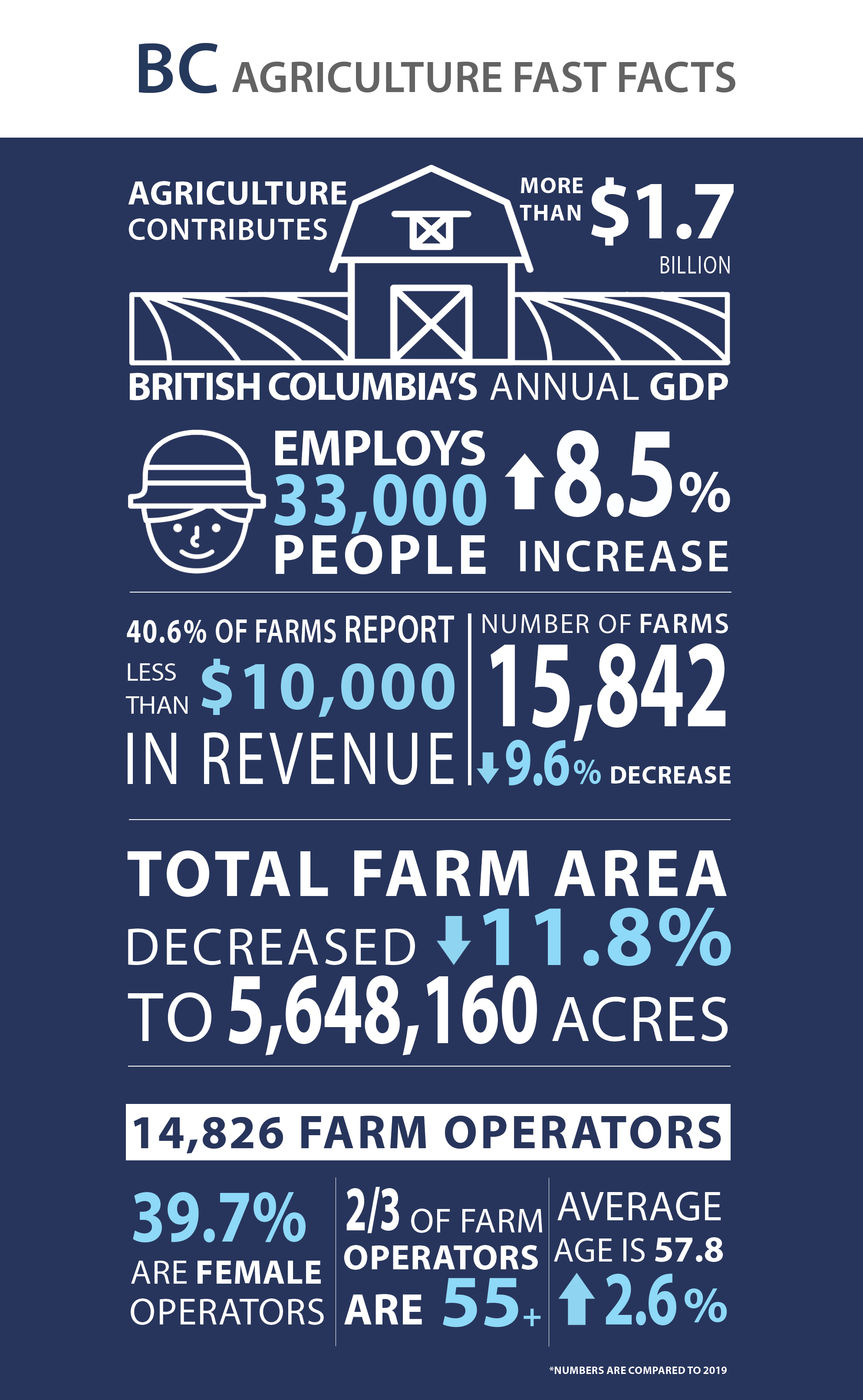
ABBOTSFORD, B.C. – October 1, 2026 – British Columbia (B.C.) has a strong set of action items for agriculture stemming from the recent Task Force on Agriculture and Food Economy, but the sector is still missing the strategic framework connecting those actions to clear goals, objectives and measurable targets for the future of B.C. agriculture. There is no growth and production plan. No strategy for increased food self-sufficiency or less reliance on imports. No way to track whether the province is strengthening the industry that grows our food, employs our people, stewards our farmland and supports our rural communities. Today, BC Agriculture Council (BCAC) is calling on every party to lay out how it will provide that strategic direction and secure the essential needs of the sector.
If our provincial agriculture sector is going to survive now and, in the future, farmers and ranchers must have greater certainty regarding land, water, labour and operating environment. Right now, there is a lack of certainty on each one for various reasons, but there are ways to remove these uncertainties through ensuring farmland protection and preservation, investing in water security and storage, safeguarding labour needs and developing a sector competitiveness plan.
“British Columbians are increasingly telling us they’re struggling to feed their families, and food security and affordability are their top concerns. Yet B.C. is the most expensive place in Canada to farm, and agriculture still lacks a north star – a strategic plan with clear goals, objectives, strategies and measurable targets that tell us where the sector needs to go and how we’re going to get there,” said Danielle Synotte, Executive Director, BC Agriculture Council. “The recent Task Force gave us a strong set of actions to build from. What we need now is the strategic direction to connect those actions and measure whether we’re actually making progress. British Columbians deserve to know, before they vote, which parties are prepared to commit to that direction. Our sector has identified solutions and is ready to work.”
BCAC is asking each party to confirm, in writing, that implementation will continue no matter who forms government on October 24 and to commit to the following desired outcomes:
1. Clear Goals, Objectives and Targets for the Sector
A provincial agriculture production plan, developed with industry and built around clear goals, objectives, and measurable targets, so government, industry and the public can track whether B.C.’s agriculture sector is actually getting stronger – giving British Columbians a clearer, more secure, and more affordable food and agricultural supply.
2. Farmland Protection and Preservation
Incentivize more agricultural production and disincentivize misuse of farmland: Update the 30-year-old revenue thresholds that let land qualify for farm tax status on as little as $2,500 in annual sales, so the Agricultural Land Reserve (ALR) is used for agricultural production, not to shelter non-farm development – keeping B.C.’s limited farmland available to grow what British Columbians eat and use, today and for future generations.
Cease development pressures on the lands within the ALR: Our membership calls on any future government to maintain the current rules regarding processing in the ALR. British Columbians are rightly proud of the ALR as a distinct policy tool for ensuring land is available for primary agricultural production, now and in the future. Any proposal that looks to chip away at these lands, chips away at the integrity of the ALR and based on public opinion, we understand that many people in this province see the ALR as critically important to the food security of our communities.
3. Water Access Certainty and Security
Secure water for food production. Guarantee farmers and ranchers a seat at the table from the earliest stages of watershed planning and invest in water storage that meets agriculture’s year-round needs, not only seasonal peaks – protecting the reliability of B.C.’s food and plant production and supply through future droughts and dry seasons.
4. Workforce and Labour Certainty
Keep farms operating. Formally safeguard agriculture’s access to the federal Temporary Foreign Worker (TFW) program, provide on-arrival medical coverage to match competing provinces, and extend existing driver’s licensing exemptions to more TFW streams – keeping B.C. farms staffed and store shelves stocked,
while ensuring fair treatment for the workers who grow B.C.’s food and plants.
5. Supportive Programs That Enable Competitiveness
Remove barriers and strengthen competitiveness. Deliver on the recent Task Force recommendation to focus government programs and investment on the subsectors and regions best positioned to compete, and implement the priorities identified in Farming at the Edge Report to strengthen farms’ financial resilience so British Columbians keep access to locally grown food and products, and rural economies stay strong. The University of the Fraser Valley report found B.C.’s commercial farms already carry the fastest growing debt load of any province in Canada – a risk it identifies as most acute among mid-sized commercial farms.
BCAC, has sent letters to the leaders of every party, asking them what their party’s plans are to commit to make efforts to achieve the above desired outcomes for the sector. Once received, BCAC will publish every response to its members and the public on this landing page.
-30-
For more information:
Ursula Klein
Communications Manager
T: (604) 854-4454 ext. 205
E: communications@bcac.ca
About BC Agriculture Council: BCAC’s mission is to support and grow a competitive agriculture sector by fostering industry collaboration and shaping effective public policy. This is achieved by delivering a unified voice for the sector to government through member farm associations that in turn represent approximately 96% of provincial farm gate sales.